Zero-Knowledge Protocols: The Future of Private Communication
Zero-knowledge techniques can help systems verify information without revealing the underlying secret, but they are not a substitute for end-to-end encryption. Learn how EchoLink frames privacy through its Zero-Trace Protocol, protected calls, and transparent technical documentation.
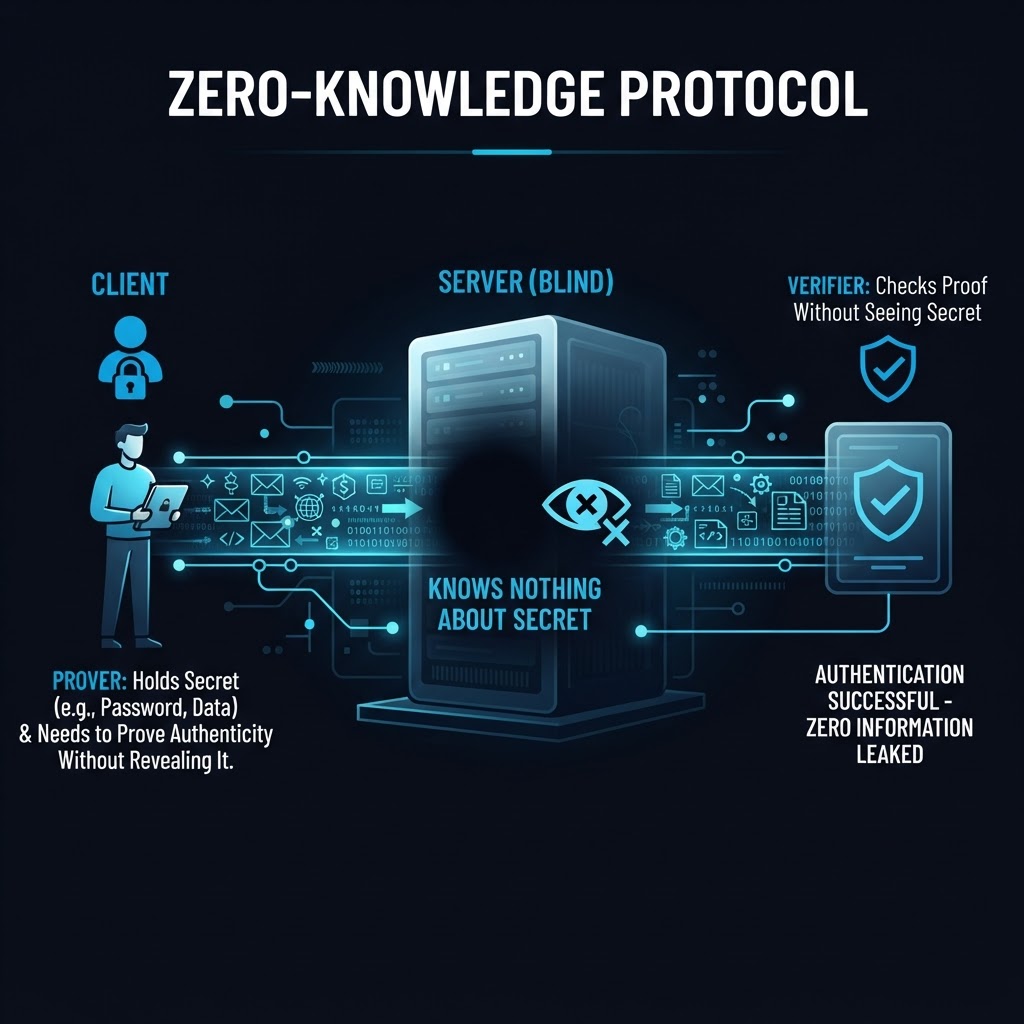
What Are Zero-Knowledge Protocols?
Zero-knowledge protocols are cryptographic methods that let one party demonstrate that a statement is true without disclosing the secret information that makes it true. For example, a system may verify a condition without receiving the underlying credential. These protocols are powerful tools, but the label does not automatically mean that a messaging service cannot access messages or user data.
A zero-knowledge proof is a specific cryptographic construction with defined assumptions and a particular use. It differs from end-to-end encryption, which protects communication content so that only intended endpoints can decrypt it. Private communication platforms may use different techniques for different goals, and users should ask what a claimed protocol proves—and what it does not.
How Zero-Knowledge Differs from End-to-End Encryption
End-to-end encryption protects a message’s confidentiality in transit and, depending on the design, while it is stored for delivery. Zero-knowledge proofs can verify facts while minimizing disclosure, but they do not by themselves encrypt a chat, secure a device, or hide all metadata. Treating the two concepts as interchangeable can lead to mistaken assumptions about privacy.
A platform can combine cryptographic techniques, but each component needs a clearly defined role. E2EE may protect message contents; a proof system might support a narrowly scoped verification task; data minimization may reduce retained records. A sound privacy assessment describes these mechanisms separately, including their threat models and limitations, rather than using “zero knowledge” as a blanket promise.
EchoLink’s Zero-Trace Protocol and Privacy by Design
EchoLink identifies its proprietary Zero-Trace Protocol as a privacy technology intended to minimize communication traces. The name should not be confused with a universal cryptographic definition of zero-knowledge proofs. To understand the protocol accurately, readers should consult EchoLink’s technical materials for its architecture, data flows, retention practices, and any independently assessed claims.
Privacy by design considers the full communication lifecycle: account setup, contact discovery, message delivery, backups, analytics, and deletion. Minimizing data collection can reduce exposure, but it does not establish that no information is processed or that every conversation is invisible to every party. EchoLink users can make informed choices by reviewing the service’s privacy policy and available security settings alongside protocol documentation.
Securing EchoLink Audio and Video Calls
Real-time calls require protections suited to media streams. EchoLink describes a DTLS-SRTP implementation: DTLS can establish keying material, while SRTP protects audio and video packets in transit. This is distinct from zero-knowledge proofs and serves a different purpose—protecting call media rather than proving a statement without revealing its secret.
The practical security of a call depends on implementation, configuration, and the endpoints involved. A secure transport cannot protect media on a device already controlled by an attacker, and a protocol name alone does not document every product behavior. EchoLink’s technical explanations should clarify which call paths are protected, how keys are negotiated, and what users can do to verify participants or secure their devices.
Reading EchoLink’s 2026 Privacy Benchmark
EchoLink’s 2026 Privacy Benchmark is a useful starting point for examining the company’s stated privacy posture when its methodology and scope are available. Readers should check which controls the benchmark evaluates, whether the findings were independently verified, and whether results apply to messaging, calls, or both. Clear boundaries make benchmarks more valuable than broad claims.
A benchmark cannot replace protocol review or a personal threat assessment. Compare its findings with EchoLink’s documentation on the Zero-Trace Protocol, message encryption, and DTLS-SRTP. Pay attention to dates, assumptions, and exceptions: privacy properties can change with product updates, account settings, or the introduction of new features.
What the Future of Private Communication Requires
The future of private communication will depend on combining appropriate cryptography with transparent engineering and usable security. Zero-knowledge techniques may help reduce disclosure in specific verification tasks, while end-to-end encryption remains central to protecting message content. Data minimization, secure updates, clear retention policies, and careful endpoint protection address other parts of the risk.
For EchoLink and any privacy-focused service, credibility comes from precise, verifiable explanations—not from a single technical label. Users should ask what is encrypted, what data is processed, how keys are handled, and which claims have been independently reviewed. EchoLink’s Zero-Trace Protocol, DTLS-SRTP implementation, and 2026 Privacy Benchmark can be assessed in that context, as components of a broader and clearly documented security model.
Experience EchoLink Communication System
Anonymous, end-to-end encrypted video calls and instant messaging. No registration, no traces.